
Every army and police force wants the same thing from marksmanship training: shooters who hit what they aim at, under pressure, with as little wasted ammunition and range time as possible. Live firing will always be the final test. But most of what makes a good shooter, a steady hold, a clean aim and a smooth trigger, can be built and corrected long before the first live round, if the simulator is realistic enough.
So what does "realistic" actually mean? In our experience it comes down to three things: the weapon feels real, the scenarios look real, and every shot is measured.
How a shooting simulator works
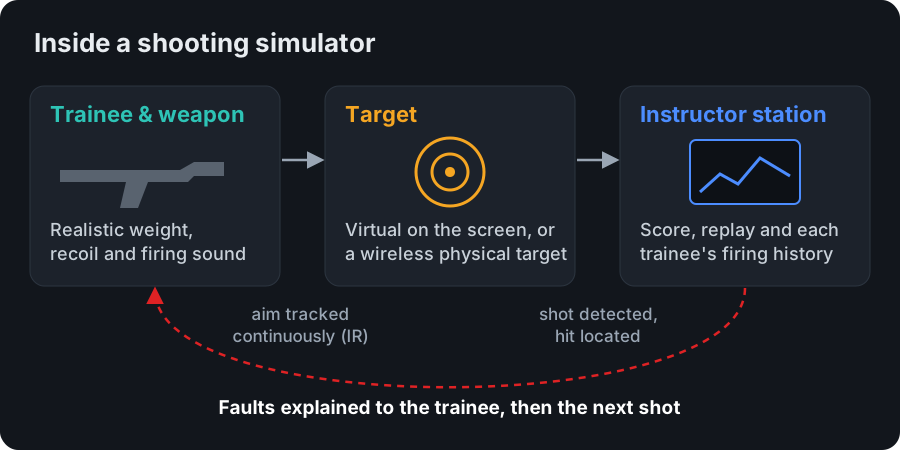
A shooting simulator has three parts. The trainee holds a weapon with realistic weight, recoil and firing sound. The target is either virtual, on a large screen, or a wireless physical target. And the instructor station records and scores everything. In the SIS Shooters Profile System, an IR-based system tracks where the weapon is pointing all the time, a hit sensor detects each shot and locates the hit or miss, and the software keeps a firing history for every trainee.
1. The weapon has to feel real
If the weapon feels like a toy, the trainee learns habits that fall apart on the range. That is why realistic recoil and firing sound matter: the trainee has to manage the kick and the noise exactly as with the real weapon. The system also supports multiple weapons, so the same room can train pistol, rifle, SMG and LMG firers, and it is wireless, portable and rugged, so it can be set up safely indoors, on a base, a ship or at a training school.
2. Measure the shot, not just the score
A score tells you that a shooter missed. It does not tell you why. The SIS system is built on Hold–Aim–Trigger (HAT) shooting theory, which splits every shot into three phases and measures each one in real time.
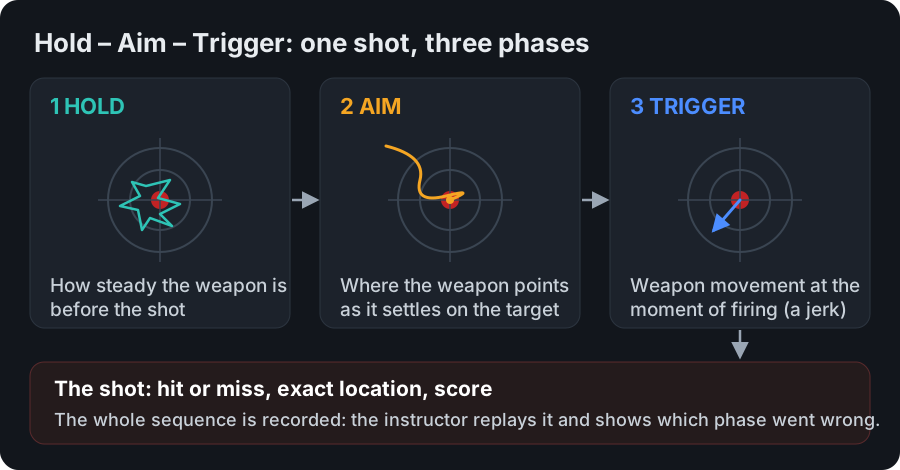
- Hold: how steady the weapon is before the shot. A wandering hold shows up immediately.
- Aim: where the weapon points as it settles on the target.
- Trigger: how the weapon moves at the moment of firing. A jerked trigger pulls the shot away from the point of aim, even when hold and aim were perfect.
Because the whole sequence is recorded, the instructor can replay a shot and show the trainee exactly which phase went wrong. Faults are passed from instructor to trainee as facts, not opinions, and results are shown both graphically and as numbers. Over weeks, each shooter's firing history shows whether the fault is really fixed.
3. Scenarios that look like the job
Shooting at a paper circle is one skill. Engaging a target that appears for three seconds in a village street is another. A realistic simulator has to cover both, step by step.
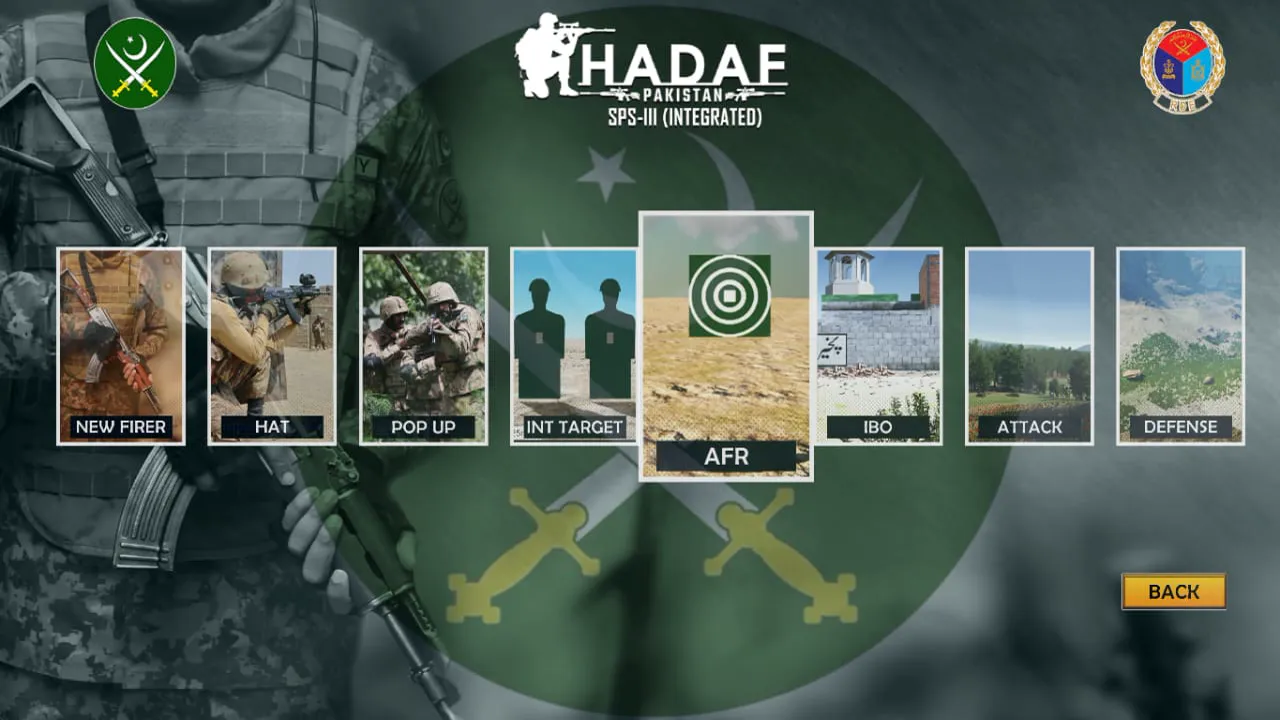
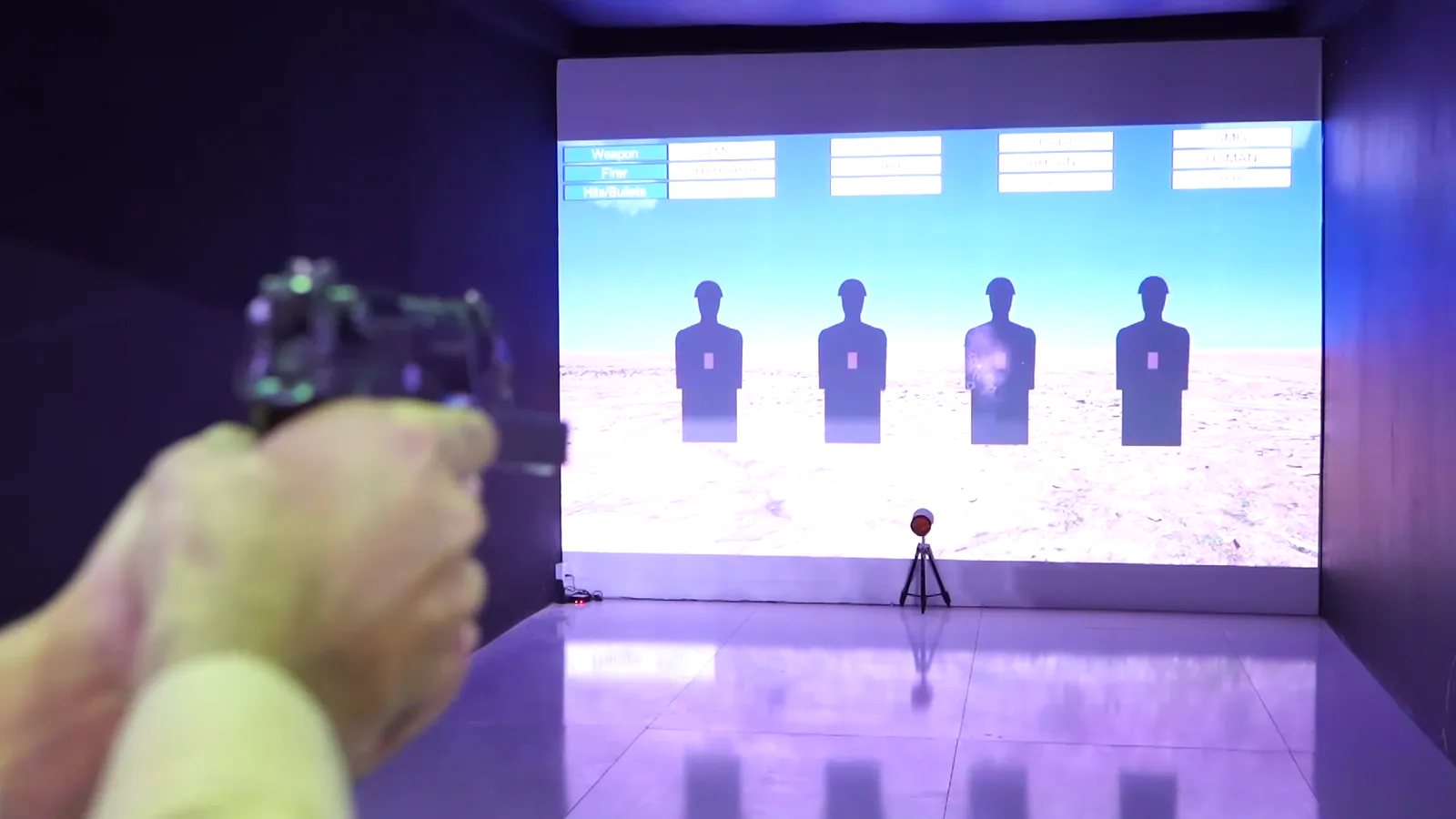
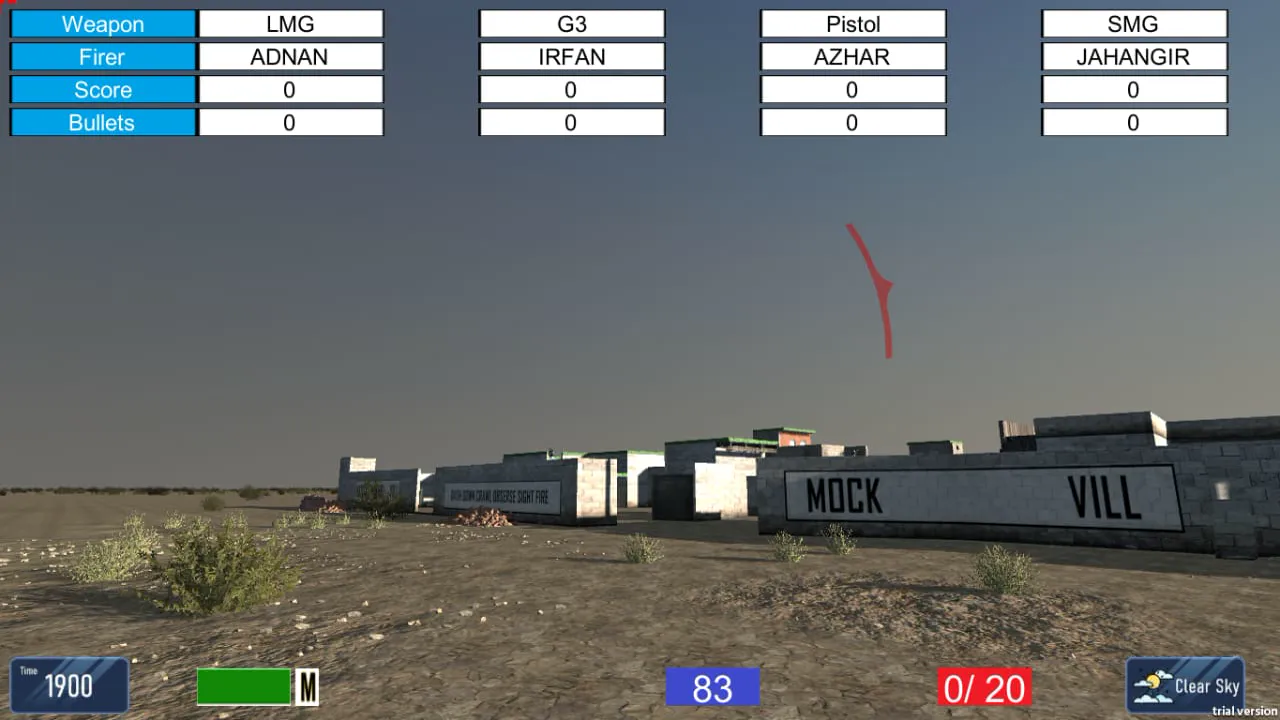
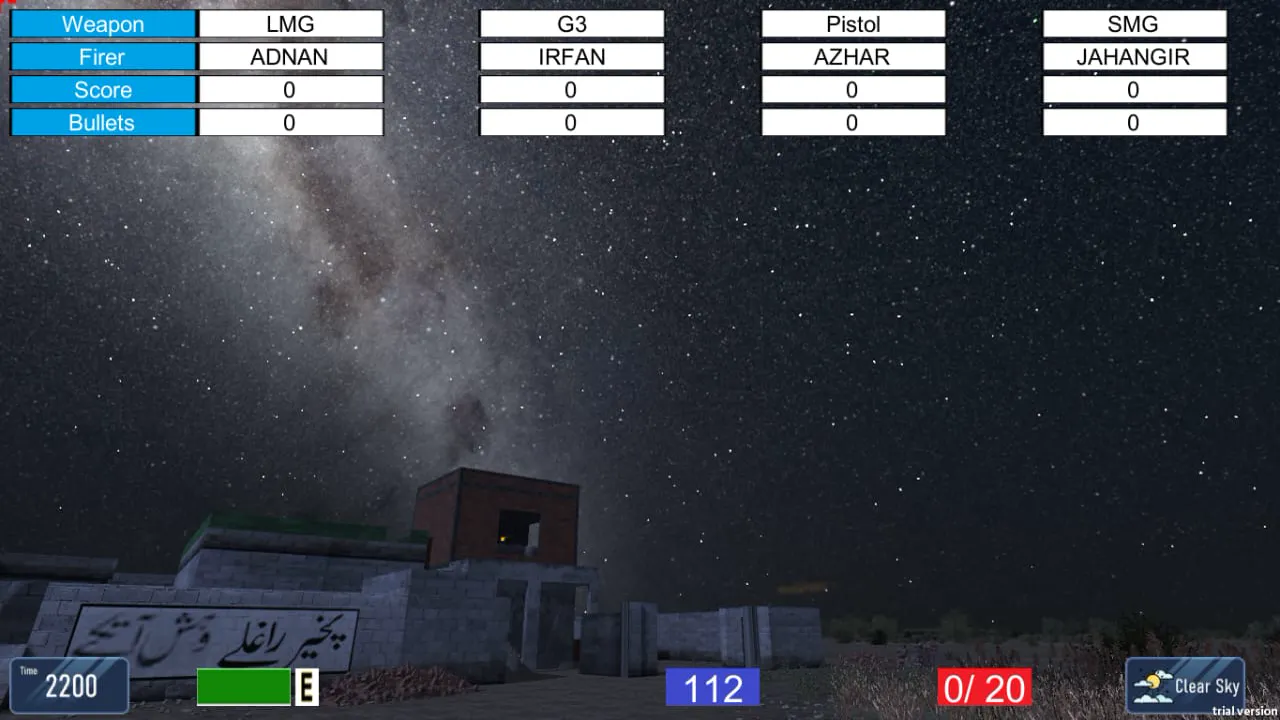
Training starts with new-firer exercises and HAT analysis, then moves on to pop-up and moving targets, and finally to attack and defence scenarios in desert, hilly, village and night environments. Four firers can train side by side, with every hit, miss and score shown live.
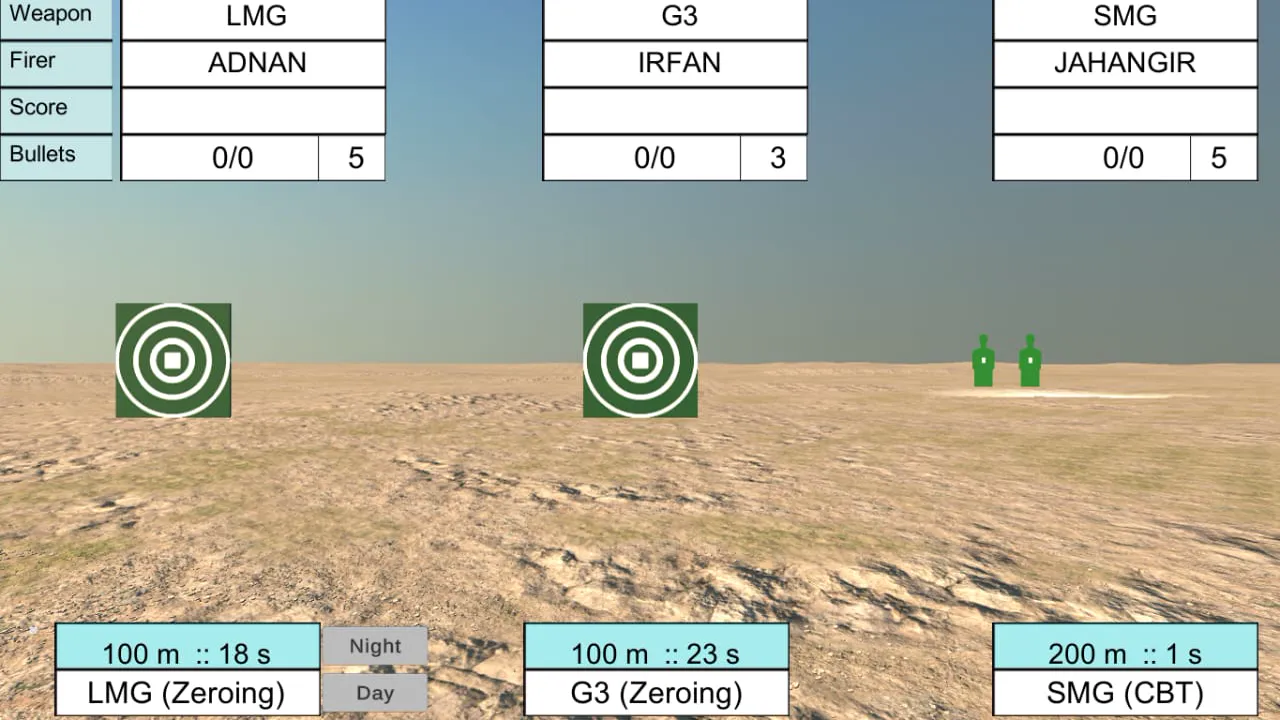
Zeroing is part of it too. Each weapon can be zeroed in the simulator, so a trainee's results are not spoiled by a sight that is slightly off.
For sniper training, a dedicated module adds an accurate mil-dot reticle, bullet trace and ballistics, breathing and breath-hold simulation, full scope adjustment for windage and elevation, and run, walk and crawl movement.
4. From the simulator to the live range
The simulator builds the skill. The live range proves it. Here too, measurement makes the difference.
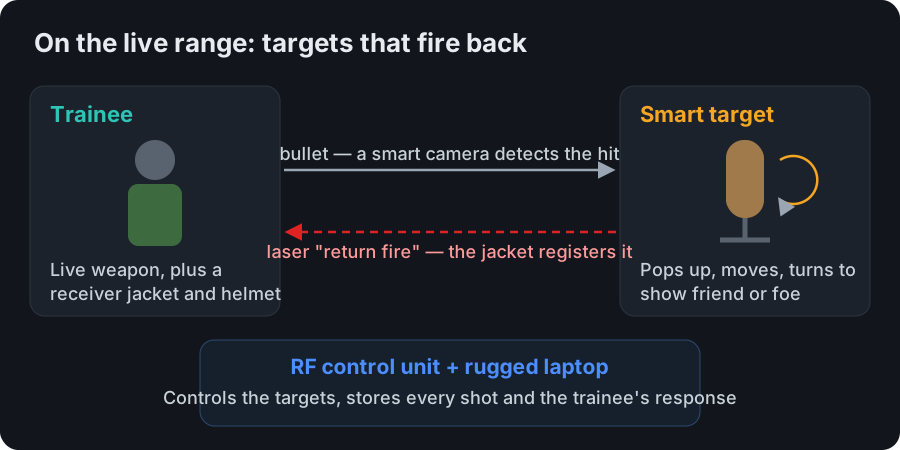
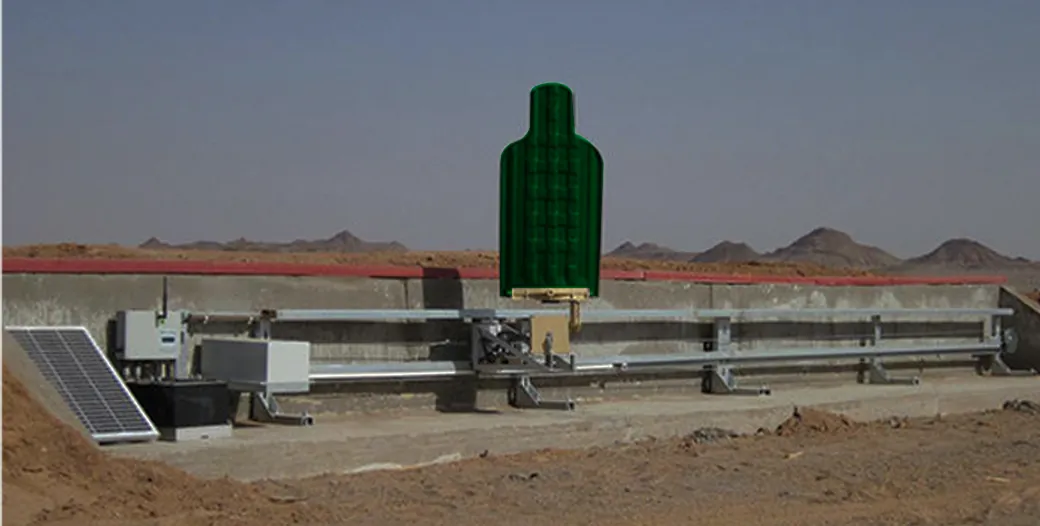
The SIS Range Firing Training Simulator brings smart targets to the live range. Targets pop up, move and rotate 360° to show friend or foe, at speeds set from a laptop. A smart camera detects bullet hits. The target can also fire a laser back at the shooter, and a receiver jacket and helmet register whether the trainee was "hit". Every shot and every response is stored for later analysis, and an up-light allows night training.
Why it pays off
A realistic simulator saves ammunition and logistics, because trainees do most of their practice firing without live rounds. It saves instructor time, because faults are measured automatically instead of being guessed from a paper target. And it builds better shooters, because every phase of every shot is measured, explained and practised until it is right.
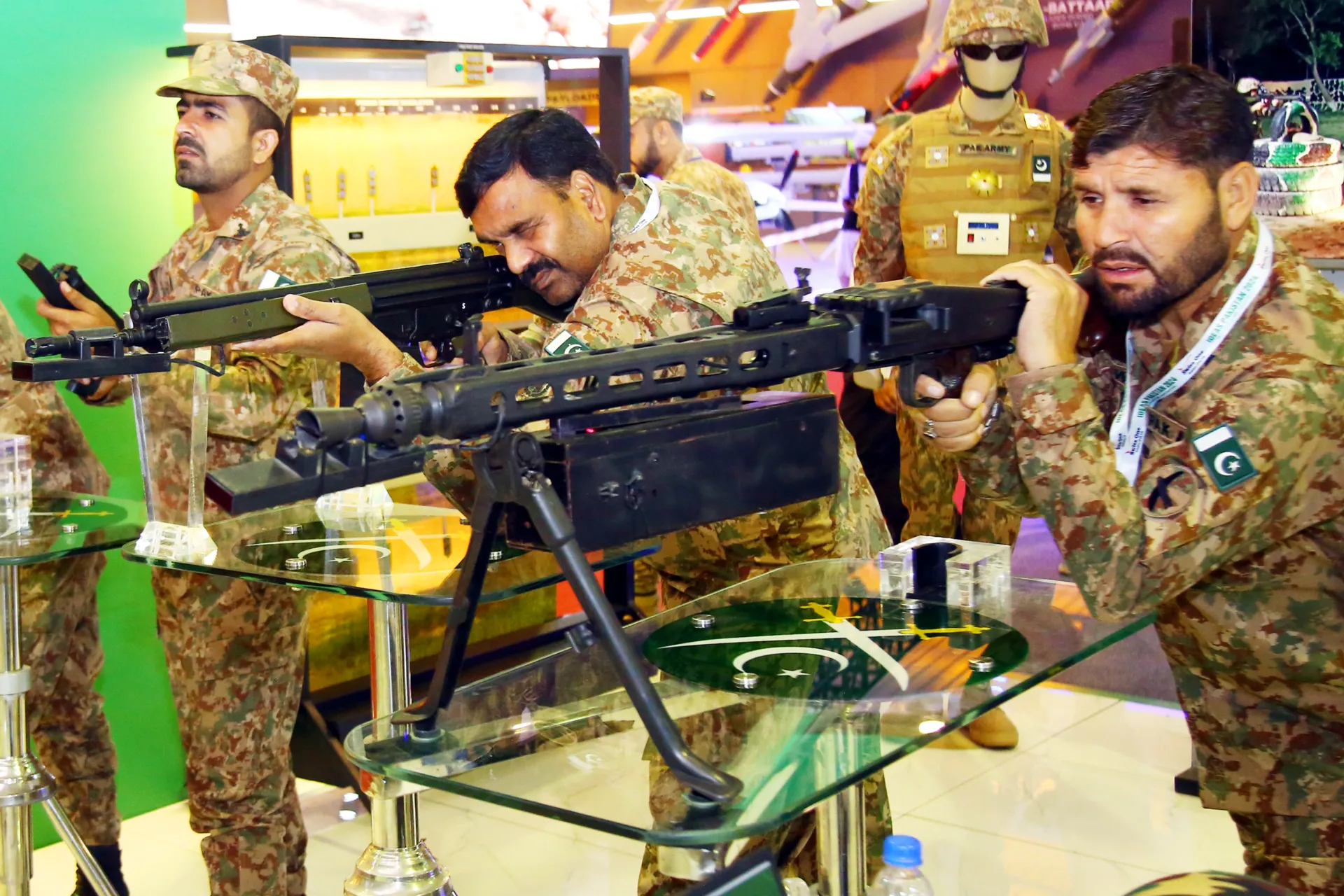
The video shows our multi-weapon shooting simulator at a national defence exhibition, with LMG, rifle, pistol and SMG lanes and live scoring.
Learn more about the Shooters Profile System, the Multi-Screen Shooting Simulator and the Range Firing Training Simulator, or contact us to arrange a demonstration.